Snow and ice put real stress on trees in Michigan. A limb can snap in one night. A whole tree can lean, split, or land on a roof before sunrise. That kind of damage leaves homeowners with a fast safety problem and a lot of questions.
This guide gives you a clear plan. You will learn what to do first, what to avoid, how to document damage, and when to call for help. Homeowners across Southeast Michigan call True Cut Tree Care Service for this kind of work every winter, so the advice here stays practical and easy to follow.
Start With Safety and Slow the Scene Down
A damaged tree can look still and safe from the driveway. That first look can fool you. Snow load, ice weight, and broken wood create pressure in odd places. This section covers the first steps that protect people, pets, and property before any cleanup starts.
Stay back and look up first
Do not walk under broken limbs.Do not stand near a tree trunk that is leaning towards your house or your garage or your driveway. Ice can damage a branch and hold it in place for a hour then it can suddenly drop.
Keep your kids and pets inside your home. Make sure there is some space between your family and the tree. A calm first move prevents more damage and lowers the chance of injury.
Check for utility danger
Power lines change the whole situation. A limb on a wire or a wire pulled low needs the utility company right away. Do not touch the tree. Do not touch the fence near it. Do not try to cut a path through the debris.
Gas is another concern. A sharp smell near the house, meter, or line means you need to leave the area and make the proper call at once.
Check the house from the ground
Look for broken gutters, roof damage, cracked windows, or a new lean in a porch or fence. Stay off the roof. Wet shingles and hidden structural damage make that a bad place to inspect on your own.
True Cut Tree Care Service sees this pattern often in Southeast Michigan after heavy storms. The safest homes are the ones where the owner steps back first and lets a trained crew assess the pressure points.
Know the Difference Between Cleanup and a True Emergency
Not every winter tree problem needs a middle of the night removal. Some jobs can wait until daylight. Others cannot. A clear decision helps you act fast and keeps you from treating a dangerous situation like a simple yard mess.
A tree on a structure counts as urgent
A tree on a house, garage, shed, fence, or vehicle is an emergency. The same goes for a tree blocking the only way in or out of the home. Pressure on a roof or wall can shift more after the storm ends.
Emergency Tree Removal Michigan services matter most at this moment. You need the site stabilized, the weight removed in the right order, and the area cleaned up without adding more damage.
A split or hanging tree is still dangerous
Some trees do not fall all the way. They crack and stay standing. Some drop a major limb that hangs over the driveway or roof. That scene looks less dramatic than a tree in a home, but it still carries real risk.
A split trunk can fail in the next gust. A hanging limb can fall as temperatures rise. That is why storm damage tree cleanup starts with assessment, not guesswork.
A tree in the yard can still store force
A trunk on the lawn may look harmless from a window. It may still be pinned under tension. One part of the tree may support another part. A wrong cut can roll the trunk, spring a branch, or trap a saw.
That is the part many homeowners do not see at first. Fallen wood rarely sits in a clean, safe position after snow and ice damage.
Fallen Tree What To Do Before You Call Insurance
The rush after a storm makes paperwork feel like the last thing that matters. It still helps. Good photos and a few notes can save time and support your claim later. This section gives you a simple record keeping plan before anything gets moved.
Take wide photos first
Stand back and photograph the whole scene. Then get closer shots of the trunk, the break point, the roof impact, the damaged gutter, the crushed fence, or the blocked driveway. Shoot from more than one angle.
Try to capture the size of the tree next to something familiar, such as a car, door, or trash bin. That gives the adjuster a better sense of scale.
Call your insurance company early
Many policies cover removal costs when the tree hits a covered structure. Some policies cover part of the cleanup even with yard damage only. The details vary, so call early and ask direct questions.
Write down the claim number. Write down the name of the person you spoke with. Write down what they asked you to save or send.
Keep every receipt tied to the event
Save receipts for tarps, board up work, hotel stays, and emergency repairs. Keep notes on the storm date and the time you found the damage. Small details help build a clear record.
This is one place where a fallen tree has a simple answer. Take photos, make the call, and keep the paper trail.
Leave the Saw Put Away
A chainsaw looks like the fast answer after a storm. Snow and ice damage change the way a tree rests on the ground. Pressure builds in bends, forks, and pinned limbs. This section explains why home cutting goes wrong so often and why trained crews work in a set order.
Weight shifts fast after the first cut
Even a medium tree carries a lot of weight. Wet wood adds more. One cut in the wrong place can release that weight all at once. The trunk rolls. A limb snaps back. The saw gets pinched.
That risk grows near decks, fences, and parked cars. It grows even more in tight side yards.
Roof work is not a homeowner job
A tree on a roof looks like a simple cut from the ground. It is not. The roof may have hidden damage under the shingles. The branch may hold weight off one section and push hard on another.
A trained crew takes the load off in stages. That step by step work protects the home and reduces more breakage.
Proper equipment changes the result
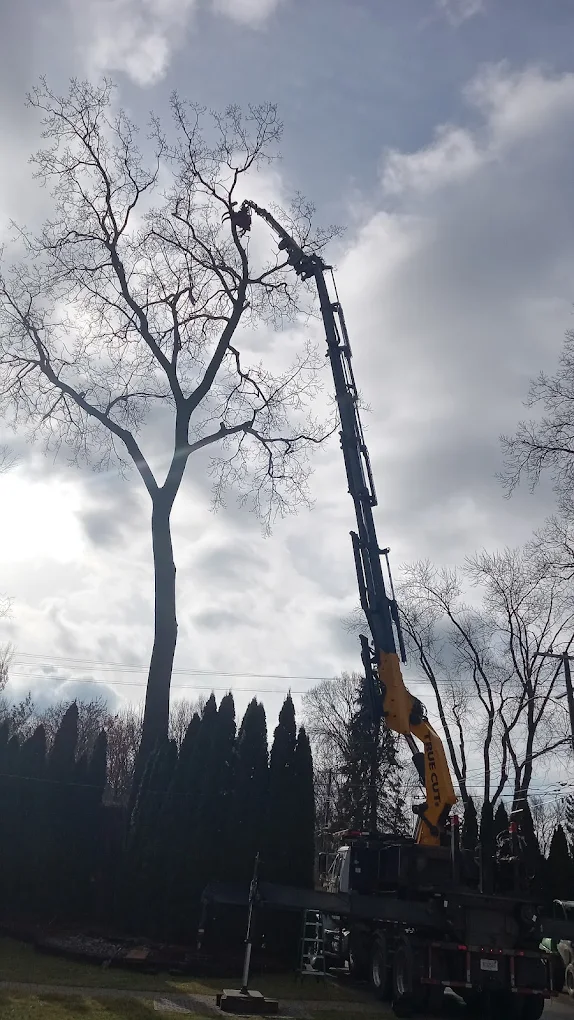
True Cut Tree Care Service uses cranes, grapple saws, spider lifts, and robotic tree removal tools for hard access jobs and hazardous removals. That matters in tight spaces and near structures. It matters even more after storms, since damaged trees rarely land in a clean or open area.
The company is family owned, second generation, and arborist led. Homeowners across Oakland and Wayne Counties call True Cut for the jobs other crews pass on, especially after snow and ice storms.
What Professional Storm Damage Tree Cleanup Looks Like
Most homeowners want to know what happens after the call. That is fair. A clear process lowers stress and helps you know what you are paying for. This section walks through the usual order of a professional response from arrival to final cleanup.
The crew starts with a full site check
The first step is not cutting. The first step is reading the tree. The crew checks lean, break points, pressure, utility hazards, roof contact, and access for equipment.
That plan shapes the whole removal. It tells the crew what must come off first and where the danger zone sits.
Removal happens in sections
Storm work rarely ends with one big pull. A crew removes weight in smaller pieces and keeps the tree under control from start to finish. That method protects roofs, lawns, fences, and nearby trees.
On larger jobs, a crane may handle the heavy sections. On tighter jobs, a grapple saw or spider lift may fit the site better.
Cleanup finishes the job
A job is not done after the last cut. Brush gets chipped or hauled away. Wood gets stacked or removed. The yard gets cleared so you are not left with a second mess after the storm.
True Cut puts real value on cleanup. Homeowners want the danger gone, but they want the property usable again too.
Lower the Risk Before the Next Snow or Ice Storm
The best time to think about winter tree damage is right after a close call. Many problem trees show signs long before they fail. This section covers the warning signs that matter, the role of pruning, and the value of an arborist inspection before the next storm rolls in.
Watch for early warning signs
Dead limbs in the crown matter. Cracks in the trunk matter. Mushrooms near the base matter. Soil lifting near roots matters. A new lean matters too.
These signs do not always mean the tree needs removal that day. They do mean the tree needs a closer look.
Schedule pruning before winter
Pruning removes weak wood and reduces canopy weight. That lowers the load a tree carries during wet snow and ice events. It can also improve structure in mature trees near homes and driveways.
This kind of care pays off in older Southeast Michigan neighborhoods, where large trees add shade and curb appeal but carry more storm risk.
Get a clear opinion on high risk trees
Some trees need trimming. Some need full removal. A trained tree expert can explain things in words and help you make a good choice for your property. True Cut has three experts with ISA certification on their team and they offer free quotes and inspections, in Southeast Michigan.
This helps homeowners know what to do before the next big winter storm hits a weak tree again.
Need Emergency Tree Removal in Michigan After Snow and Ice Damage?
Snow and ice damage creates a fast problem. You need calm guidance, safe work, and a crew that knows how to handle hazardous removals near homes, roofs, driveways, and power lines. True Cut Tree Care Service has served Southeast Michigan since 1999, and the team brings second generation arborist experience, advanced equipment, and safety first work to every emergency call.
If you need Emergency Tree Removal Michigan service after a winter storm, call True Cut Tree Care Service for a free estimate. The team handles storm damage, tree cleanup, hazardous removals, and urgent tree work across Oakland and Wayne Counties, day or night.